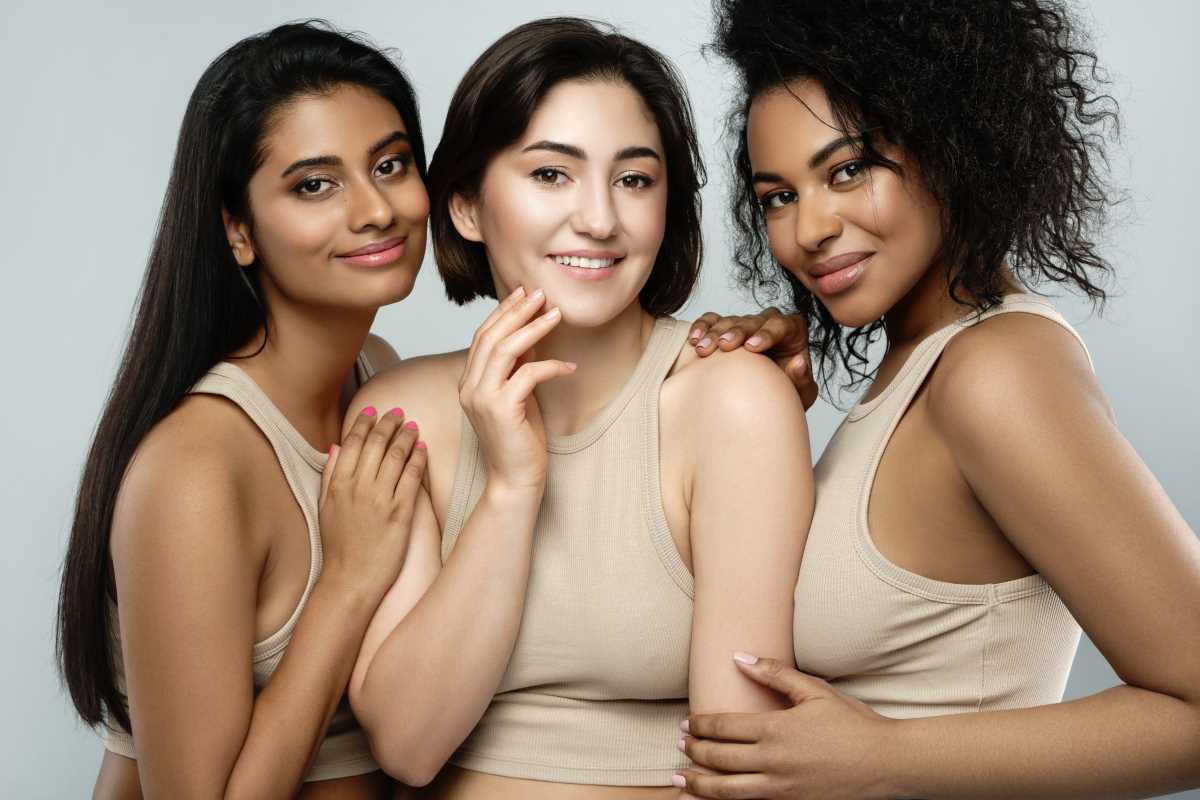
 (Image via
We often like to think of our personal style as a unique fingerprint, a solitary shout into the void declaring exactly who we are. But if you look closely at your closet or your living room, you might realize you are actually harmonizing with a choir. Whether it is a group of teenagers all wearing slightly different variations of the same baggy jeans or a couple whose living room looks like a collaborative Pinterest board come to life, style is rarely a solo act. It is a shared language we use to signal belonging, to align ourselves with tribes, and to visually communicate our values without uttering a single word.
This phenomenon of shared aesthetics goes beyond just following trends or being a copycat. It is a deeply psychological and social tool that helps us navigate the complexities of human connection. When we adopt a shared style, whether it is with a partner, a friend group, or a subculture, we are building a bridge. We are saying that we see the world in a similar way, or at least that we want to. From the matching tracksuits of the early 2000s to the curated minimalism of modern tech offices, these collective visual choices are powerful markers of identity that define who is in, who is out, and what we stand for together.
The Psychology Of Mirroring And Belonging
Humans are social creatures who are hardwired to mimic one another, a behavior known as mirroring that signals empathy and rapport. In the realm of style, this often manifests subconsciously as we start to dress like the people we spend the most time with. You might notice that after a few months of dating someone, your wardrobes start to overlap in color palette or silhouette. This isn't about losing your individuality, but rather about creating a visual unity that reinforces the bond. It is a way of creating a shared "us" that is distinct from the rest of the world, a visual shorthand that says you are a unit.
This drive for belonging extends to larger groups as well, serving as a social glue that binds subcultures together. Think of the leather jackets of punk rockers or the flannel shirts of the grunge era. These weren't just fashion choices; they were uniforms of rebellion and solidarity. Adopting the group's aesthetic is a rite of passage, a way of signaling commitment to the group's values and ideals. It provides a sense of safety and validation, confirming that you have found your people and that you are not navigating the wilderness of life alone.
Couple Style As A Visual Love Language
There is a fascinating evolution that happens in long-term relationships where partners begin to look like siblings, or at least like they shop at the same store. This phenomenon, sometimes called "boyfriend twin" or harmonious dressing, is a tangible expression of a shared life. It is not necessarily about wearing matching "I'm with stupid" t-shirts, but rather a subtle alignment of tastes. It might be a shared appreciation for vintage denim or a mutual decision to prioritize comfort over high fashion. This aesthetic convergence reflects the merging of lifestyles, habits, and environments that happens when two lives become intertwined.
While some might mock couples who dress alike, there is actually a sweetness to this shared identity. It suggests a level of comfort and compatibility that has seeped into the very fabric of their daily lives. It shows that they influence each other, that they value each other's opinions, and that they are moving through the world as a team. Of course, there is a fine line between cute coordination and losing one's self in a relationship, but generally, a little bit of sartorial syncing is a sign of a healthy, connected partnership where influence flows both ways.
The Digital Tribe And Aesthetic Cohesion
The internet has accelerated the formation of style tribes, creating micro-communities based entirely on shared visual preferences. On platforms like TikTok and Instagram, aesthetics like "cottagecore" or "dark academia" are not just fashion trends but entire lifestyle identities. Adopting the visual markers of these groups, such as floral dresses or tweed blazers, allows individuals to instantly signal their membership in a global community. It is a way of finding kindred spirits across vast distances, united by a love for a specific vibe and the values attached to it.
This digital aesthetic cohesion also allows for rapid experimentation with identity. You can try on a "cyberpunk" persona one week and a "clean girl" aesthetic the next, finding the community that resonates with your current state of mind. It turns style into a form of live-action roleplay where the stakes are low but the sense of connection is high. These shared digital styles provide a template for identity, offering a starter pack for self-expression that can be customized and refined. It is a way of saying, "I am this kind of person," using a visual vocabulary that is instantly understood by millions of strangers online.
Corporate Culture And The Office Uniform
Workplaces have always had dress codes, but modern corporate culture has evolved a more subtle form of shared style that reflects the company's identity. In the tech world, the hoodie and jeans uniform is a deliberate rejection of the stuffy suits of traditional finance, signaling innovation, casualness, and a focus on output rather than appearance. Conversely, a creative agency might have an unspoken dress code of eclectic, artsy attire that signals their out-of-the-box thinking. When employees adopt this look, they are not just dressing for work; they are embodying the company brand.
This shared office style creates a sense of internal cohesion and equality. When the CEO wears the same t-shirt as the intern, it flattens the hierarchy and fosters a sense of approachability. However, it can also create pressure to conform, where looking "right" becomes a prerequisite for being taken seriously. Navigating this professional landscape requires understanding the unspoken rules of the tribe. It is about finding a way to signal that you belong to the team while still maintaining a shred of personal flair that says you are not just a corporate drone.
Home Decor As A Collective Biography
Our homes are perhaps the most intimate expression of shared identity, a physical manifestation of the compromises and collaborations between the people who live there. A couple's living room is a negotiation between two histories, two sets of tastes, and two visions of comfort. The resulting style is a hybrid that tells the story of their relationship. The mid-century modern chair might be his, while the vibrant rug is hers, and together they create a space that is uniquely theirs. It is a visual dialogue that evolves over time, incorporating souvenirs from shared travels and heirlooms from both families.
For roommates or families, the shared spaces become a canvas for collective identity. The clutter on the fridge, the arrangement of furniture, and the art on the walls all contribute to a group aesthetic that defines the household's vibe. It signals to visitors what kind of home this is, whether it is a chaotic, creative hub or a serene, minimalist sanctuary. This shared environment reinforces the group's bond, creating a physical container for their shared life. It is where individual preferences are smoothed over to create a cohesive whole, proving that style is often less about "me" and more about "we."





.jpg)